Within this post, I will be talking about my chosen campaign with analysis from an art-direction perspective, whilst describing visual strategy and audience.
Campaign.
The campaign I have chosen to research upon is the Burger King campaign: “Moldy Whopper” by INGO, DAVID Miami & Publics Bucharest. The advertisement video can be viewed bellow.
Direction, Impact and Effectiveness.
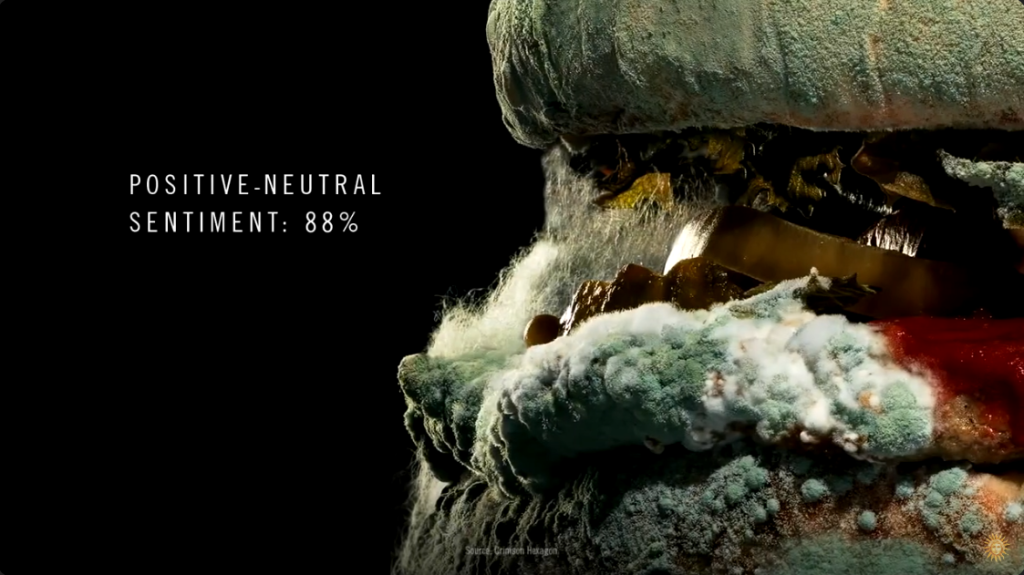
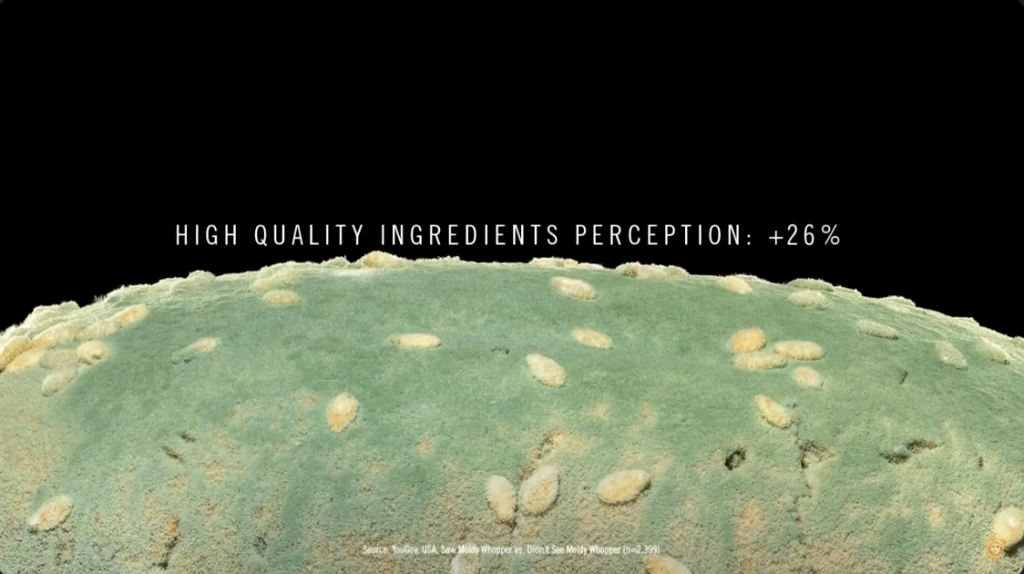
Burger King’s campaign was notably honest, bold and disruptive. Instead of relying on traditional mouth-watering advertisements, the brand chose to present a decaying burger to highlight the natural ingredients used in its products. This approach aimed to contrast Burger King’s burgers with those of competitors, which often contain preservatives that slow down the natural process of decay. The advertisement also used strong juxtaposition. This is evident in the closing tagline, “The beauty of no artificial preservatives.” While the video shows a burger gradually rotting, the tagline reframes this process as something positive, emphasising authenticity and the idea that natural food follows the rules of nature rather than resisting them.
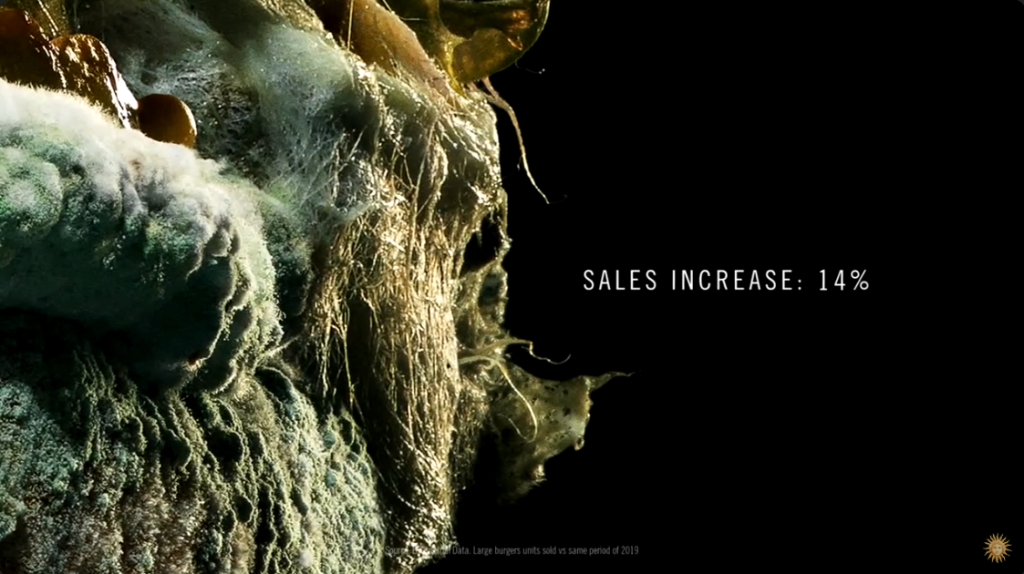
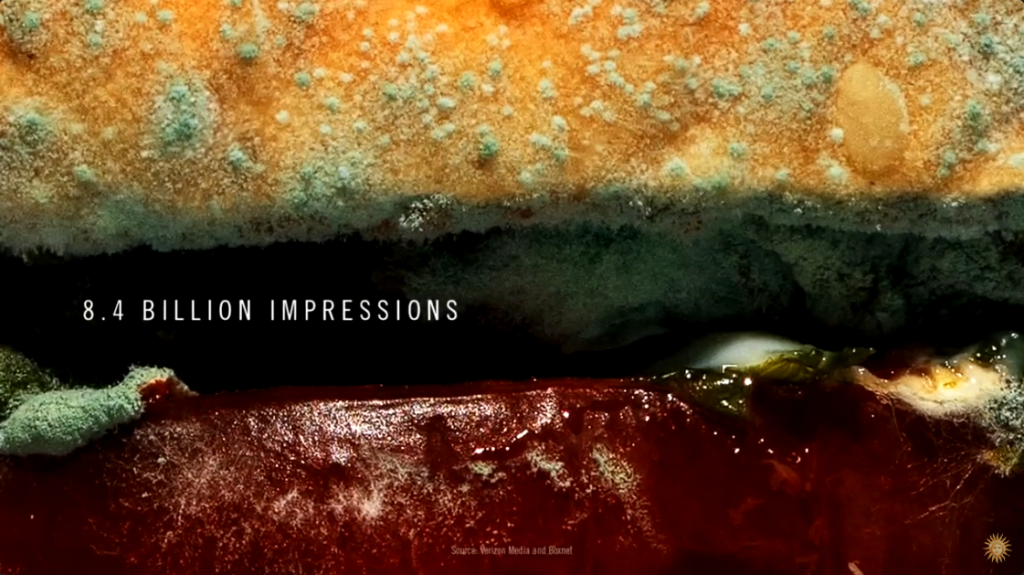
The campaign proved highly successful. Reports showed a 14% increase in sales and 8.4 billion impressions across social media platforms. In addition, the advertisement raised consumer awareness about preservatives used in the fast-food industry and contributed to the removal of approximately 8,500 tonnes of artificial ingredients worldwide.
Audience Reach.
The campaign will engage well with Health-conscious and ingredient-aware consumers for its transparency in food quality and production, within its visual demonstration of the burger decomposing, consumers can rely on Burger King for authentic burgers and have a clear mind when enjoying the product. Additionally, the campaign is effective towards Gen Z and Millennials, this is because the video uses shocking imagery with high emotional reaction that becomes highly shareable in the online space, this has been proved with the campaigns video reaching 8.4 Billion impressions across social medias as stated before.
On the other hand, consumers that are sensitive to disgusting imagery will be put off by the campaign, as the thought of eating a burger that proudly advertises how rotten it is will put them off. Additionally, the older demographic may not see the conceptuality within the advertisement and take it very literal wondering why a decomposing burger is being prominently showcased. As a result, some viewers may mistakenly assume Burger King’s ingredients are made of decomposed meat that therefore negatively influences the customers perception of the brand.
Propositions and Different Approach.
The advertisement has been plastered along America for a large amount of consumers to witness, to broaden audience engagement the advertisement should be displayed within the European and Asian countries with the text being altered from English to the native language of where the advertisement is held. This method will broaden audience engagement as expanding to multiple continents means more people will stumble across it.
A certain aspect that I would personally change about the campaign would be to transport the tagline “The beauty of no artificial preservatives” to the start of the video, this is because, the viewers can understand why the burger then proceeds to decompose, whereas the tagline at the end would only confuse viewers as they may wonder why a burger is being decomposed without context.
References:
The One Club for Creativity (June 2020) Youtube. Available online: https://www.youtube.com/watch?v=f9B9HGQsx0k [Accessed 20/02/2026]
Campaign Unpacked (March 2024) Youtube. Available online: https://www.youtube.com/watch?v=LzKX-_PiJ5Q [Accessed 20/02/2026]