In this post I will be researching collaborative examples within successful case studies that involve creative and marketing teams, and how important collaborative efforts are between the two.
Why is collaborative effort important within industries?
Collaborative efforts between creative and marketing teams, ensures that the teams have faster and smarter decision making by reducing misalignment and meaningless back-and-forth revisions late into the process, this is done with art directors successfully interpreting marketing briefs into visual concepts. If the two teams work in isolation, a lot of information that can be used to benefit the industry get lost, with spectacular ideas that don’t convert and data driven campaigns that feel forgettable and bland. With all of this in mind, acknowledgement within your peers strengths and weaknesses ensures a stable outcome within the stages of the campaigns.
Case Studies:
Case Study: Nike – “Why Do It”.

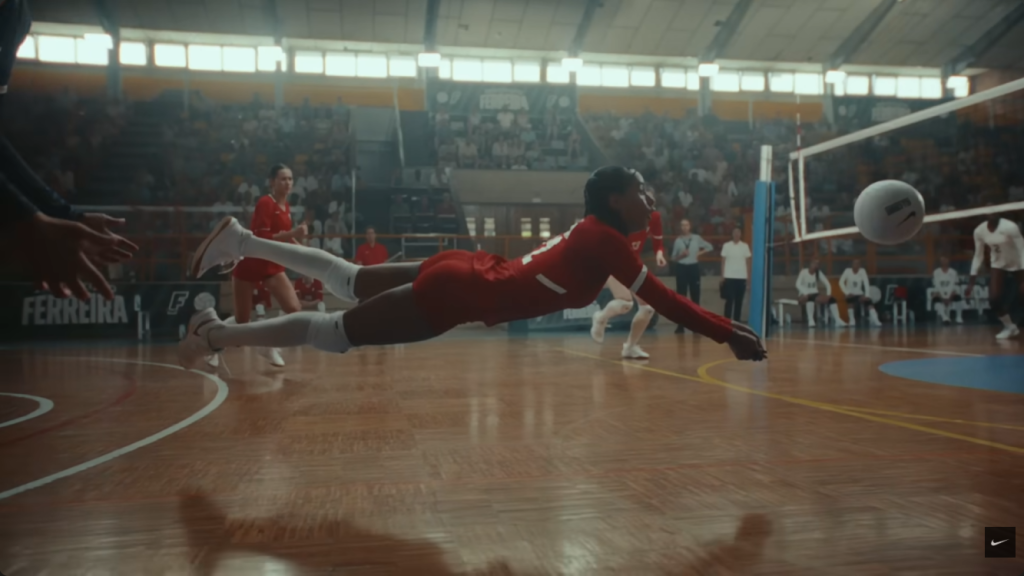
The case study I have researched upon with a large team is the Nike “Why Do It” campaign that was launched in 2025, this is a strategic continuation of the previously well known “Just Do It” campaign that was created in 1988. Nike have created this campaign to support the different generation of customers by appealing to “Gen Z” public.
Within the creative team, their role and responsibility was to create a powerful and culturally relevant campaign, this was done by creating the visuals and storytelling which can be seen in “figure 1 and 2”, when viewing the images we can see 2 athletes reaching as far as possible to succeed and win the competition, overall the question of “Why Do It” is ultimately answered with their actions of trying to achieve greatness. Another responsibility was to evolve the brand positioning without losing its identity by identifying certain shifts in the audiences mindset which is primarily Gen Z, the Gen Z community was easily pleased simply by having LeBron James within the “Why Do It” promotional video as a lot of younger audiences idolise LeBron James, leading to a positive impression to the younger audiences.
Case Study: Dumb Ways To Die.


The case study that I have researched upon that involved a smaller team was the “Dumb Ways To Die” (aka: DWTD) campaign which was about sending a fun but serious message about railway safety. Within the video that was created, characters can be seen being distracted on their phones and dying with a very catching song playing in the background. This campaign was so successful it branched out into a game that was played by hundreds of millions of users worldwide.
The creative team for DWTD created simple characters with minimalistic animation and bright colours to contrast the dark subject that the campaign was portraying, this was done to effectively deliver the message of railway safety without scaring off the people that the company are trying to protect. Within the marketing team, a choice of creating a catchy song was decided that ultimately lead to the music video gaining over 350 million views alone on YouTube. The reason for its success was due to the marketing teams understanding of the humour and style which made the overall message feel native to the audience.
Personal Group Working Structure.
Within the marketing group I am associated with, we have decided to be vocal with one another to ensure that no details are missed and the best outcome of our campaign can be achieved. This is done by sharing progression when creative aspects are constructed to receive valuable criticism leading to a perfected campaign that aligns with the target audience.
References:
Nike (September 2025) YouTube. Available online: https://www.youtube.com/watch?v=Bcpu-jqAL6w [Accessed 16/04/2026]
Dumb Ways To Die (November 2012) YouTube. Available online: https://www.youtube.com/watch?v=IJNR2EpS0jw [Accessed 16/04/2026]